


The process of a knock down rebuild is an increasingly popular choice for homeowners in Australia, particularly in Brisbane, as it allows for the creation of a new home on an existing property. This comprehensive guide will delve into the costs associated with knock down rebuild projects, the factors influencing these costs, and the overall rebuilding process. Readers will gain insights into average pricing, timelines, and financing options, helping them make informed decisions about their construction projects. Understanding the nuances of knock down rebuilds can alleviate concerns about costs and streamline the journey from demolition to a brand-new home.
The average cost for a knock down rebuild project in Australia typically ranges from $500,000 to $1,000,000. This price range encompasses various factors, including demolition and site preparation costs, which can amount to approximately $15,000 to $30,000. Additionally, custom designs can average between $3,000 to $5,000 per square meter, significantly impacting the overall budget. Understanding these costs is crucial for homeowners considering this option, as it allows for better financial planning and expectations.
Further research delves into the specific financial aspects of residential demolition within the Australian market.
Demolition Costs for Residential Buildings in Australia
Australian residential market, which is the focus of this paper, the latter is uncommon, leaving mechanical demolition for a common residential building demolition project in Australia.
Case study of demolition costs of residential buildings, C Liu, 2006
Several factors can affect the costs of knock down rebuild projects, making it essential for homeowners to consider these elements when budgeting. Key factors include:
The rebuilding process involves several critical steps that homeowners must navigate. Initially, a site inspection is conducted, which typically takes 1-2 weeks. Following this, a design consultation lasts about 2-4 weeks, where homeowners can finalize their plans. The construction phase, which is the most extensive part of the process, can take anywhere from 6 to 12 months, depending on the complexity of the project and any unforeseen delays.

In Brisbane, the average costs for knock down rebuild projects range from $500,000 to $700,000. It's important to note that regional variations can affect pricing, with inner-city suburbs often being 10-20% higher than regional averages. Conversely, outer-metro areas may have lower land rates but could incur higher transport costs for materials and labor.
The structure of the knock down rebuild process in Australia typically spans 10-14 months. This timeline includes several phases, such as obtaining planning approval, which can take 4-12 weeks, and the demolition phase, which lasts 1-2 weeks. Understanding this structure helps homeowners set realistic expectations for their projects.
Insights into the detailed workflow planning of Australian house construction further illuminate these timelines.
Australian House Construction Timelines & Workflow Planning
These data include activity durations, the logic and relationship between activities, list of sub-contractors and crews, general schedule of one house construction, materials needed for
House completion time in Australia: Workflow planning approach, 2024
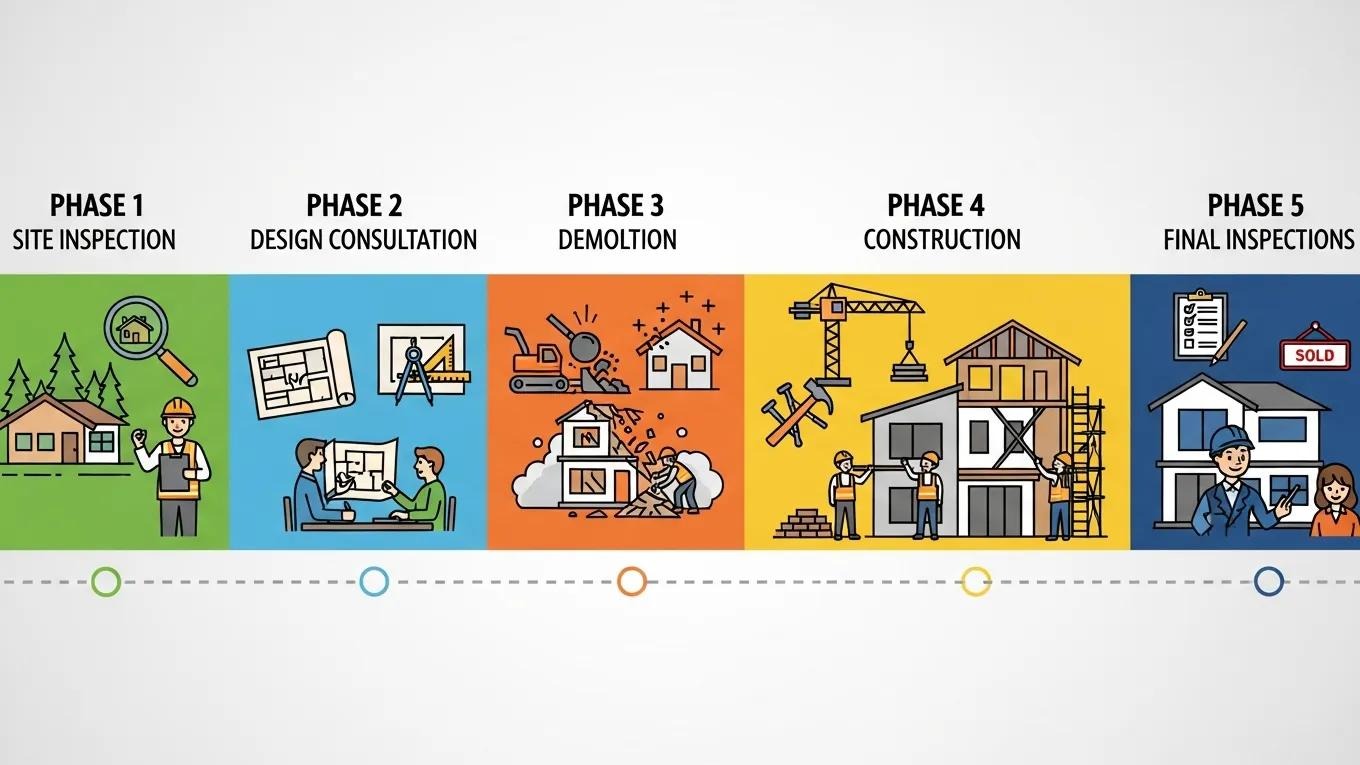
This structured approach ensures that homeowners are well-informed and prepared for each stage of their project.
Navigating local council approvals and regulations is a crucial aspect of the knock down rebuild process. Homeowners must secure building permits and development applications before commencing construction. Compliance with local building codes is essential, and the planning approval phase typically takes 4-12 weeks. Understanding these requirements can help streamline the process and avoid potential delays.
The typical timeline for a knock down rebuild project is approximately 10-14 months. This includes the design and approval stage, which can take 3-5 months, followed by the construction phase lasting 6-12 months. Homeowners should be aware of this timeline to effectively plan their living arrangements during the rebuild.
From demolition to the completion of a new home, the average duration is around 10-14 months. The demolition phase itself usually lasts 1-2 weeks, followed by final inspections that take an additional 2-4 weeks. This timeline provides a clear picture of what homeowners can expect during their project.
Several common delays can impact the knock down rebuild process, including:
To manage these delays, homeowners should maintain open communication with their builders and plan for contingencies.
There are several ways homeowners in Australia finance a knock down rebuild project. The most common option is a construction loan, which releases funds in stages throughout the build process rather than as one lump sum. Some lenders also offer specialised knock down rebuild loans designed specifically for homeowners replacing an existing property with a new home.
Depending on your situation, you may also be eligible for government grants or incentives, particularly for energy efficient homes or first home buyers. Private financing options can also be available for homeowners who may not qualify for traditional lending.
One of the biggest factors affecting affordability is the total project cost, including demolition, site preparation, council approvals, design, construction, and temporary accommodation during the build. Research into knock down rebuild activity across Australian suburbs has also found that many homeowners rely on bank loans to fund these projects due to the significant upfront investment required.
Understanding your borrowing capacity, repayment structure, and all associated costs before starting the project can help reduce financial stress and make the rebuild process far more manageable.
Livit Constructions is committed to maintaining quality and transparency in their pricing for knock down rebuild projects. This commitment is reflected in their comprehensive planning and assessment processes, which ensure that all costs are clearly outlined from the outset. Homeowners can expect transparent pricing structures that avoid hidden fees, fostering trust throughout the project.
Livit Constructions prides itself on its commitment to skilled craftsmanship and the use of superior materials in all their projects. This dedication ensures that each knock down rebuild not only meets but exceeds client expectations, resulting in high-quality homes that stand the test of time.
Effective communication is a cornerstone of Livit Constructions' approach. They provide detailed cost documentation and maintain transparent communication practices throughout the project. Homeowners receive itemized cost breakdowns and fixed-price contracts, ensuring clarity and peace of mind as their project progresses.
Client feedback regarding their knock down rebuild experiences with Livit Constructions highlights high satisfaction levels. Common themes in testimonials include appreciation for the quality of workmanship, the transparency of the process, and the overall professionalism of the team. Engaging with clients throughout the project fosters a positive experience and builds lasting relationships.
For detailed pricing information, HomeBuilder offers transparent tier-based plans and cost breakdowns that can help homeowners better understand the financial commitments involved in such projects.
Additionally, exploring financing options tailored for knock down rebuilds can provide valuable insights into managing the monetary aspects effectively.
Research from Australian Construction News highlights the latest trends and innovations in knock down rebuild projects, offering homeowners a broader perspective on what to expect in the current market.
